
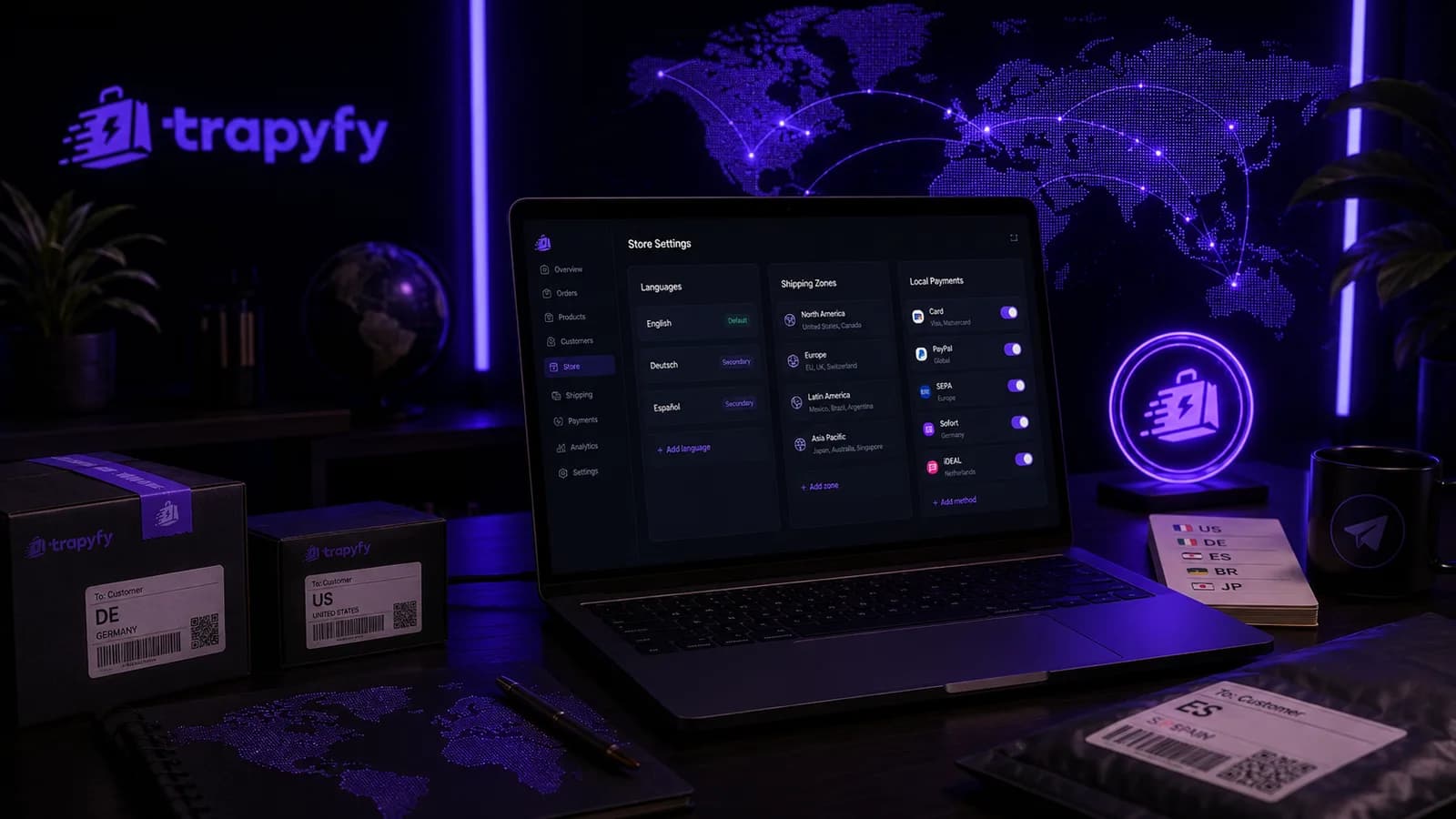
Telegram is one of the easiest places to build an audience across countries. Communities form fast, buyers message you directly, and there is no marketplace gatekeeper sitting between you and the sale. That is exactly why a telegram store for international sellers is appealing — and also why cross-border selling gets messy without a system behind it.
The moment you serve buyers in several markets the variables multiply: language, currency, shipping, payments, tracking and support. Handle all of that by hand and mistakes pile up. This guide covers the operational setup you need.
What is a Telegram store for international sellers?
It is a Telegram-based storefront designed to serve customers in more than one country from a single channel. Instead of pasting prices and chasing payment screenshots, buyers browse a catalogue, pick options, and check out inside Telegram.
The “international” part changes the build. An international Telegram store has to present products clearly across languages, show prices buyers recognise, apply the right shipping rules per region, and confirm orders automatically. You can build a Telegram storefront with that structure baked in rather than bolting it on later.
Why does international Telegram selling need more than a chat?
Manual selling works for a handful of orders a week; across borders it stalls. The same problems show up for almost every Telegram shop for global sellers:
- Buyers ask the same questions about price, stock and delivery, in different time zones.
- You juggle separate price lists for different regions.
- Shipping gets confused — wrong zone, wrong cost, wrong timeline.
- Language barriers cause ordering mistakes.
- Payment options that work in one country fail in another.
- Order tracking lives in your head or a spreadsheet.
- Support quality drifts as volume grows.
Stacked across markets, these cost you sales and refunds. Structure is what makes Telegram ecommerce for international sales repeatable instead of chaotic.
Language and product presentation
Inside a busy private community, clarity beats long copy. Product names should be plain and specific. Descriptions should answer the obvious questions — size, contents, who it is for — in a couple of lines.
For Telegram store languages, decide early how far you localise. A seller shipping wellness or supplement products across Europe might keep one English catalogue but add localised notes on key items. A larger operation may run separate flows or translated product content per market.
Example: a CBD or vape brand selling into the UK and Germany benefits from consistent product names plus short localised descriptions, so a German buyer is not guessing what a listing means. The goal is fewer “is this the right one?” messages, not a translation project.
Pricing and local currency expectations
Buyers trust prices in a currency they recognise. Showing a familiar currency at checkout reduces hesitation and the “how much is that really?” back-and-forth. Trapyfy supports multi-currency pricing (USD, GBP, EUR) so the number a buyer sees matches their market.
This article keeps currency brief on purpose — our dedicated multi-currency Telegram store guide goes deeper. The rule here is simple: clear pricing in a familiar currency builds confidence before the buyer ever reaches payment.
Shipping zones and fulfilment rules
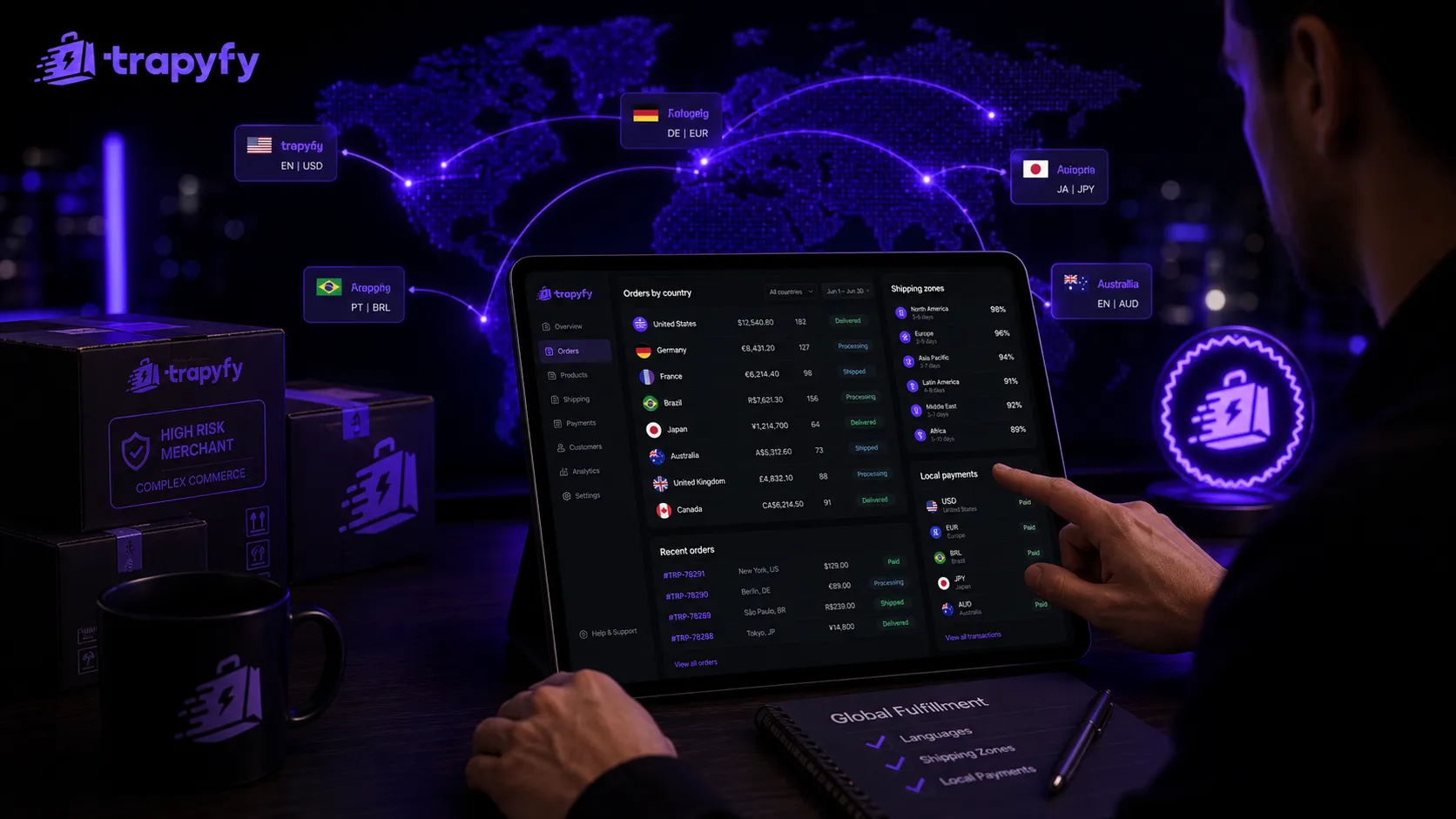
Shipping is where international orders most often go wrong. A structured store applies the right rules per region automatically. Map out:
- Country-based shipping options with the correct cost for each zone.
- Realistic delivery timelines per region, set before checkout.
- Warehouse or fulfilment routing, so each order leaves from the right location.
- Unavailable regions blocked at checkout, not discovered after payment.
- Product restrictions by region, where certain items can only ship to certain markets.
Structured order data is what makes this reliable. When the destination, zone and product rules are captured at checkout, Telegram fulfilment routing can send each order to the right warehouse with the right method — fewer mispicks, fewer refunds. For multi-warehouse setups, see how fulfilment automation handles routing at scale.
Local payments and checkout preferences
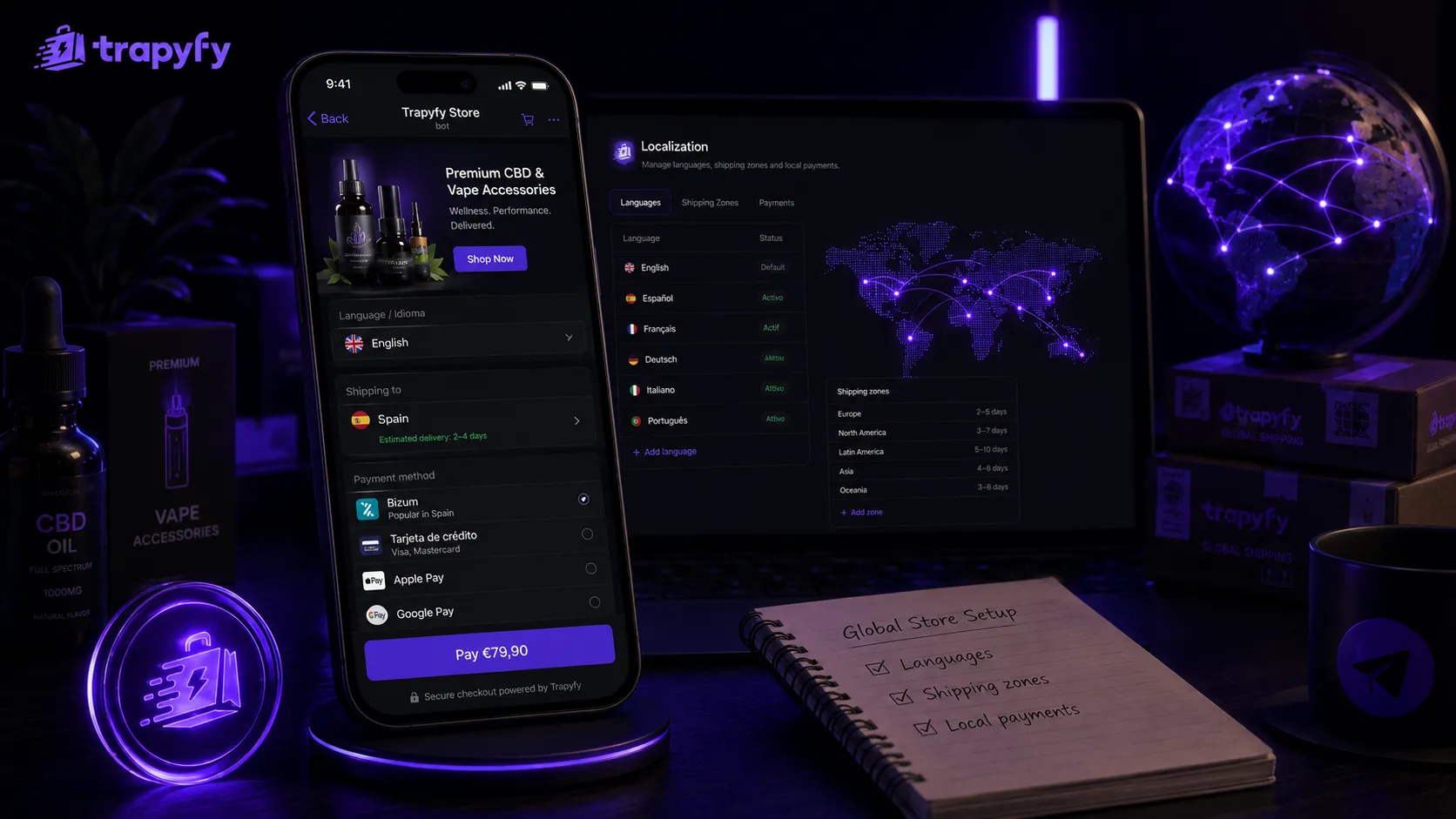
Payment habits differ by country. A buyer in one market may expect a card, another a wallet, another a regional method. If the option they trust is missing, they hesitate — and hesitation at checkout loses sales.
For local payments Telegram store setups, focus on the experience, not the plumbing: show the relevant options, confirm the total in a familiar currency, and keep the steps short. A clean Telegram checkout for international buyers signals a real shop.
Order tracking and buyer communication across countries
Once an order is paid, silence creates anxiety — especially across borders where delivery takes longer. Automated updates close that gap.
- Automated status updates: confirmed, dispatched, on the way.
- Fewer “where is my order?” messages, because buyers already know.
- Support workflows that route questions instead of losing them.
- Consistent follow-ups that build trust with repeat buyers.
Reliable Telegram order tracking turns a one-time buyer into a returning one — and for private communities and repeat-purchase products, that retention is where the margin sits.
What international sellers should automate first
You do not need everything on day one. Automate in this order:
- Catalogue — clear names, options and stock.
- Pricing and currency logic — the right number per market.
- Shipping zones — costs and timelines per region.
- Checkout flow — short, with relevant payment options.
- Order confirmation — automatic, every time.
- Fulfilment routing — orders to the right warehouse.
- Tracking updates — status without being asked.
- Customer records — so repeat buyers are recognised.
Layering Telegram order automation on top of this checklist is what lets a small team serve several countries without burning out in the inbox.
How Trapyfy helps international sellers build Telegram stores
Trapyfy lets you build a no-code Telegram storefront designed for selling across markets. The pieces work together rather than as bolt-ons:
- Structured product catalogue with clear options.
- Checkout flows that suit different buyer types and markets.
- Multi-currency support (USD, GBP, EUR).
- Order automation from confirmation to follow-up.
- Fulfilment routing across warehouses and regions.
- Customer communication and records in one place.
- A setup that scales as you expand beyond your home market.
A Telegram ecommerce API for extending the same data is planned for a future release, and you can match the platform to volume on the pricing plans. It suits complex commerce too — private communities, wellness, vape, CBD and supplements.
Two sellers, same products, very different Sundays
Picture two sellers shipping the same wellness range into five countries. On Sunday morning the first is still buried in the inbox: a buyer in Spain wants the price in euros, a parcel has gone to a blocked region, and a “where is my order?” lands from Germany at midnight.
The second seller’s Sunday is quiet. The catalogue answered the price question before it was asked. The checkout refused the blocked region on its own. The dispatch update sent itself. Same orders, far fewer fires.
That gap is the entire case for structure. Countries, currencies and shipping rules never get simpler as you grow — but with the right setup they stop landing on you one message at a time.
FAQ
What is a Telegram store for international sellers?
It is a structured Telegram storefront built to serve buyers in more than one country, with localised product info, country-based shipping zones, local payment options and automated order updates — instead of selling manually in chat.
Do I need to translate my whole catalogue?
Not always. Many sellers keep one clear catalogue and add localised notes on key products. Larger operations may run separate flows or translated content per market. Start with clarity, then localise where confusion costs sales.
How do shipping zones work in a Telegram store?
You define zones by country or region, each with its own cost, delivery timeline and any product restrictions. Structured order data then drives fulfilment routing, so each order ships from the right location with the right method.
Can international buyers pay in their local currency?
Yes. Trapyfy supports multi-currency pricing (USD, GBP, EUR) so buyers see totals in a currency they recognise, and you can present the payment options that fit each market at checkout.
Turn Telegram into a real international storefront
If you are selling to buyers across different countries, Trapyfy helps you turn Telegram into a structured international storefront instead of managing every order manually in chat. Set up languages, currencies, shipping zones and checkout once, then let automation carry the rest.