
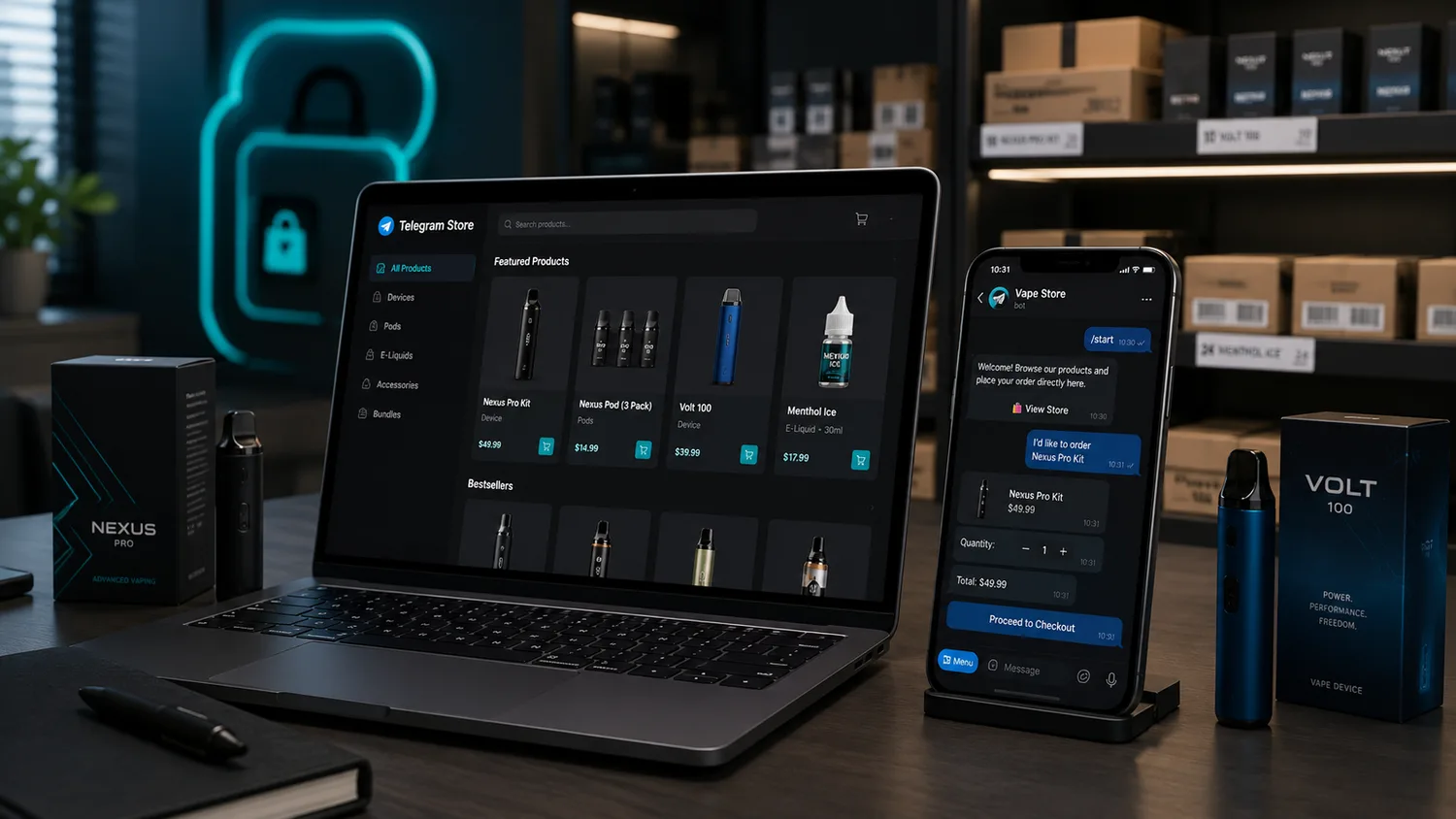
Selling vape outside the major ad ecosystems means rebuilding sales infrastructure from the ground up, and a growing number of brands are doing it inside Telegram. A Telegram store for vape brands turns one-on-one conversations into a structured commerce channel with direct orders, live stock control, verified payments and automated repeat-buyer flows. This guide breaks down how the model works, why it’s resilient to platform bans and what to build first if you want recurring revenue without depending on rented audiences.
Why Vape Brands Are Migrating to Telegram-Based Storefronts
Disposables, e-liquids and pod systems live in the same regulatory grey zone as supplements, kratom and CBD: payment processors hesitate, Meta and Google reject the ads, and even Shopify quietly suspends merchants after a complaint cycle. Vape operators who rely on a public storefront end up paying for traffic they cannot keep, and rebuilding tracking pixels every quarter.
Telegram changes the cost structure. The brand owns the audience, the channel is unlikely to be deplatformed for a flavored disposable, and the bot infrastructure lets a single operator run a catalog the size of a regional distributor. A well-built Telegram store for vape brands behaves less like a chat and more like a private storefront — searchable products, cart, checkout, order history and a reliable way to reach buyers when a new drop lands.
The shift isn’t theoretical. Operators selling vape on Telegram routinely report repeat-buyer rates above 40% within ninety days of switching, simply because the same channel that takes the order also handles support, restock alerts and reorder reminders without leaving the app.
How a Telegram Store for Vape Brands Handles Direct Orders
Direct ordering inside Telegram is the part most brands underestimate. The buyer should never have to leave the chat to confirm a SKU, ask for stock or paste a wallet address. Done right, the bot turns a casual question — “do you still have the blueberry 5000?” — into a structured order card within seconds.
From DM to Order Card in Seconds
A solid bot recognizes product aliases, slang and misspellings, then surfaces the matching variant with price, stock and a one-tap “add to cart” button. The same conversation can hold a multi-line cart, apply tier pricing for wholesale, and surface a summary the buyer can confirm with a single emoji reaction.
Multi-Catalog Support for Disposables, Liquids and Hardware
Vape inventory rarely fits a single shape. Disposables move on flavor and puff count, e-liquids on nicotine strength and bottle size, mods on coil compatibility. A serious Telegram store for vape brands exposes attribute-aware filters so the same chat can sell a 600-puff disposable to a walk-in customer and a 50-unit case to a B2B reseller without a second bot. Serving both buyer types from one catalogue is common across B2B selling models, where trade and retail demand sit side by side.
Stock Control Without Spreadsheets
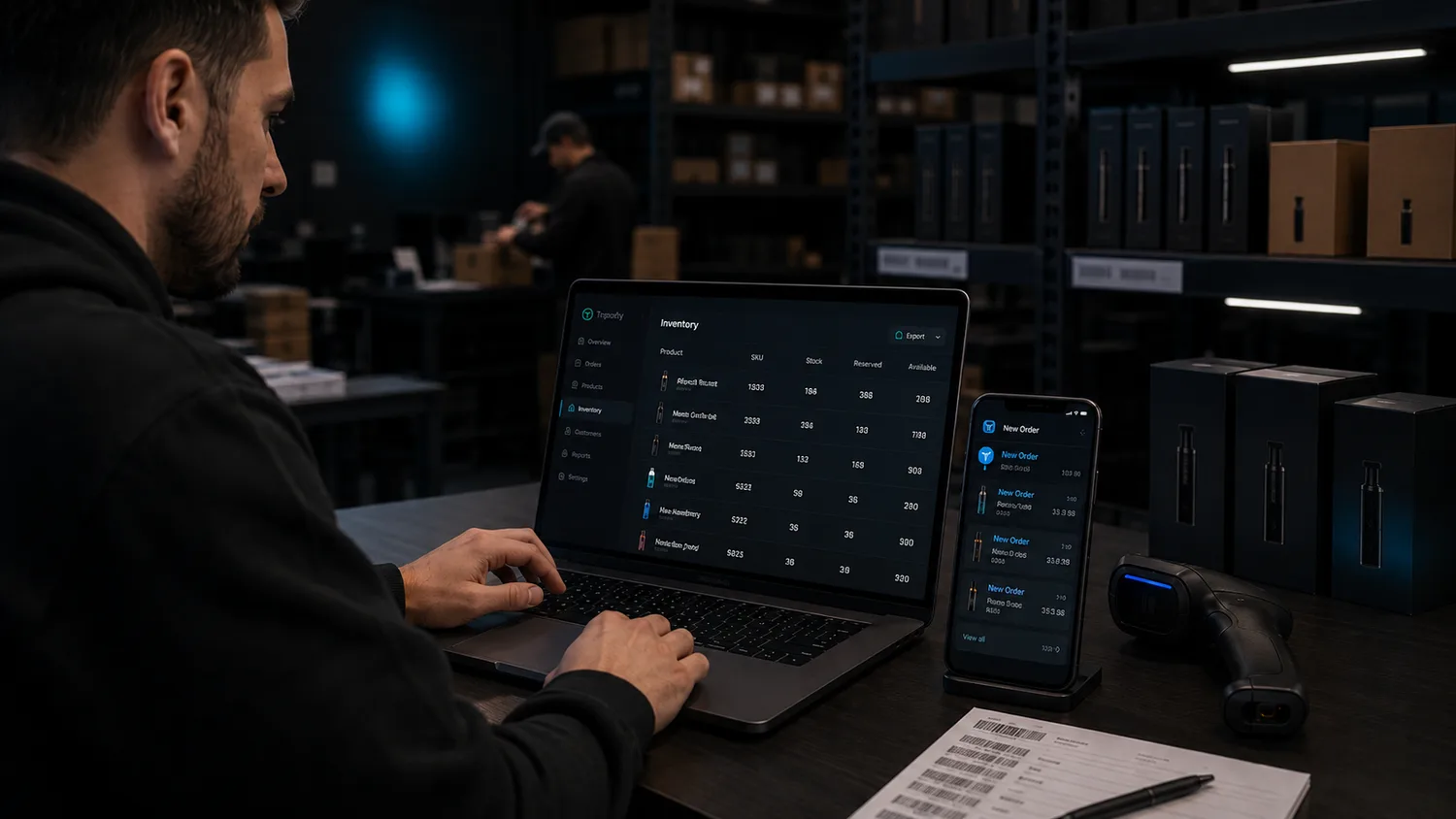
The fastest way to burn buyer trust is selling stock you don’t have. Manual spreadsheets break the moment two operators take orders in parallel, and they collapse entirely during a drop. Brands that scale past a few hundred orders per month run on a live automated stock dashboard wired directly to the bot, so every confirmed order decrements the same source of truth.
Live inventory inside the chat also unlocks two flows that paid ads can’t replicate: instant restock pings to buyers who asked about an out-of-stock flavor, and automatic hiding of variants that fall below a safety threshold. Both reduce refund pressure and protect the operator’s reputation in a category where one bad fulfillment becomes a Reddit thread.
Checkout and Payment Verification That Doesn’t Break in High-Risk Categories
Checkout is where most vape operators lose the order. Card processors decline the MCC, PayPal claws the funds back two weeks later, and crypto sounds intimidating to a buyer who just wants their disposable. The fix isn’t a single payment method — it’s a checkout flow tuned for high-risk categories that quietly routes each buyer to the rail they’re already comfortable with.
Once the buyer pays, the bot needs to confirm the transaction without a human chasing screenshots. Automated payment verification reads on-chain confirmations for crypto, listens to webhook callbacks from local rails like Pix, OXXO or SEPA, and instantly flips the order status to “paid”. The operator never touches a bank statement, and the buyer gets their receipt before they switch apps.
This is also the layer that protects against fraud. Failed verifications park the order in a review queue instead of releasing inventory, and replay attacks using the same transaction hash are rejected at the bot level — the kind of guardrail public-storefront vape merchants pay thousands per month to a third-party processor for.
Repeat Buyer Flows: Where Most Vape Brands Leave Money on the Table
A first-time vape buyer is worth roughly one order. A repeat buyer, opted into the same chat, is worth six to twelve. Yet most operators treat Telegram as a transactional channel and never build the second-order machine. The brands pulling away from the pack are the ones using in-chat order tracking as the entry point to a full retention loop.
The pattern looks roughly like this: order confirmation triggers a status thread, the status thread triggers a delivery feedback prompt, and the feedback prompt seeds a 14-day reorder reminder timed to the buyer’s typical consumption rate. Every step happens inside the same conversation, so the open rate stays close to 90% instead of the 18% an email blast would earn.
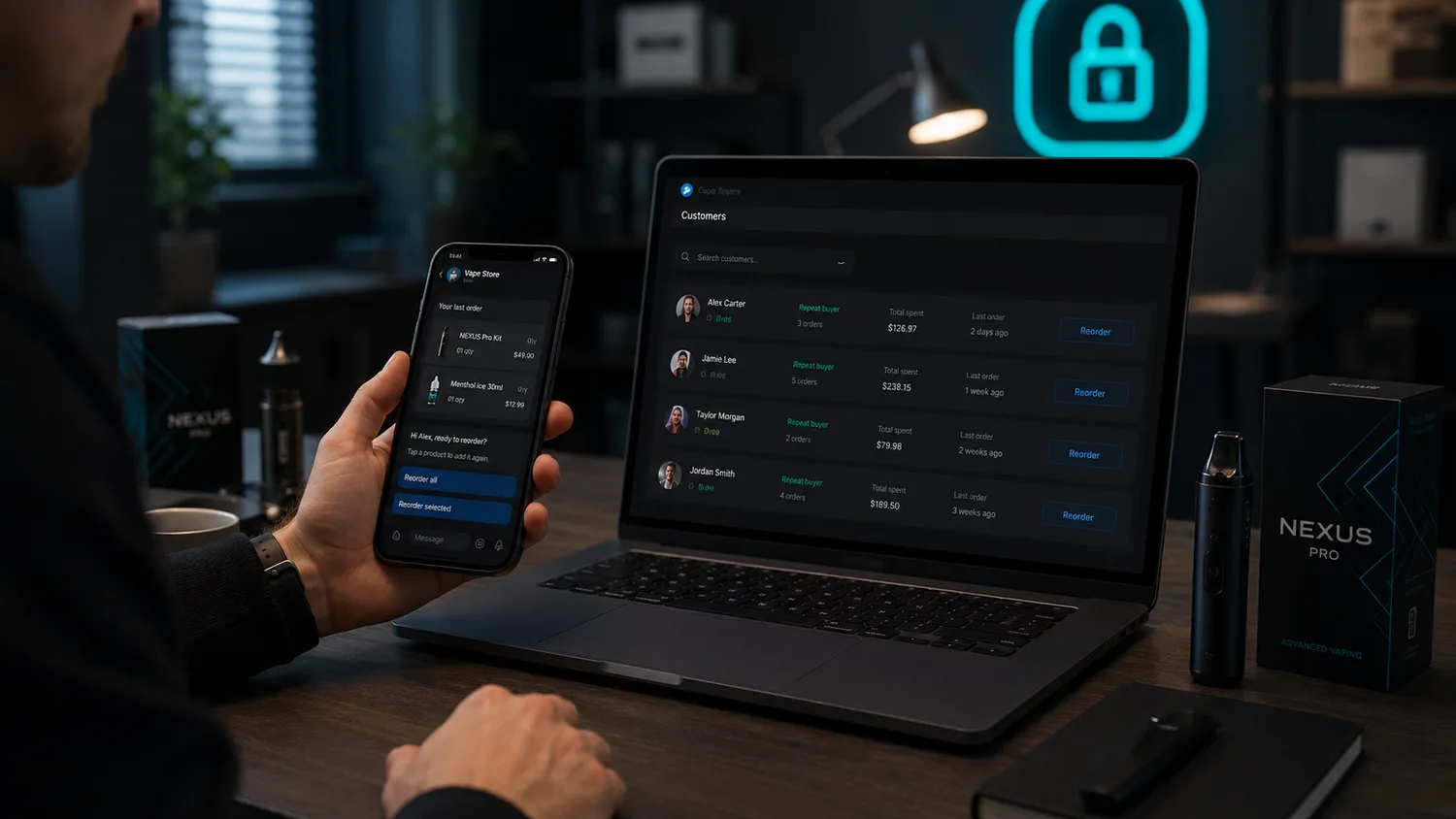
Layer in tiered loyalty — a private “VIP drop” channel for buyers past three orders, an early-access list for limited disposables, a referral code generated inside the bot — and the cost of acquiring the next sale drops to near zero. That’s the real reason vape operators stop chasing Meta ads after their first quarter on Telegram.
Surviving the Ban Cycle: A Resilient Sales Channel
Every vape brand eventually meets the ban cycle: an Instagram page gone overnight, a Shopify suspension, a TikTok shadow-ban that quietly tanks revenue. Telegram doesn’t make a brand untouchable, but it concentrates the assets that matter — the buyer list, the order history, the payment rails — into a stack that can be rebuilt in hours, not weeks.
The operators who treat this seriously run on a dedicated Telegram commerce stack purpose-built for restricted categories, with redundant bots, mirrored channels and an export of the buyer list ready to point at a new handle if the original ever gets actioned. The setup cost is small; the alternative is starting from scratch.
It’s also worth remembering that Telegram’s Bot API is built for exactly this kind of long-running commercial automation — webhooks, payments, inline queries and channel management are first-class primitives, not workarounds.
Your Next Telegram Vape Storefront Starts With One Conversation
The brands winning in vape right now aren’t the ones with the slickest landing page — they’re the ones a buyer can message at 11pm and walk out with a paid order before midnight. A Telegram store for vape brands compresses the entire funnel into a single thread: discovery, cart, payment, confirmation, restock and the next reorder. Build it once, instrument it with live stock and verified payments, and the channel keeps compounding while competitors are still appealing their latest ad ban.
If you’ve been waiting for the right moment to move off the rented platforms, the answer is the same as it was last quarter: the buyers are already on Telegram. The question is whether your store is.
Frequently Asked Questions
Is a Telegram store for vape brands legal?
Selling vape on Telegram is subject to the same age-verification, labeling and shipping laws as any other channel — the platform itself doesn’t change the underlying regulation. Operators are responsible for enforcing age gates, complying with regional flavor restrictions and following local nicotine tax rules. Telegram simply removes the platform-level advertising bans, not the legal obligations.
How do payments work inside a Telegram vape store?
Payments are routed through whichever rails fit the buyer’s region — stablecoins, local instant-payment networks like Pix or SEPA, or invoice-based methods. The bot listens for on-chain confirmations or webhook callbacks, verifies the amount, and flips the order to “paid” without manual intervention.
Can the same bot handle wholesale and retail vape orders?
Yes. Attribute-aware catalogs let a single Telegram store for vape brands serve a 600-puff disposable to a retail buyer and a 50-case order to a B2B reseller in the same chat, with quantity-based price steps applied automatically once an order crosses the volume you set. Minimum order sizes are not enforced by the platform — they stay a store policy you confirm when you review the order. The mechanics of both trade motions are covered in our guide to selling wholesale on Telegram.
What happens to my buyer list if Telegram bans the channel?
Properly configured stores keep an exportable copy of the buyer list, order history and contact graph outside Telegram itself. If a handle is actioned, a mirrored bot can be redeployed on a new username and the buyer list re-imported within hours.
How quickly can a vape brand launch a Telegram storefront?
With a managed stack, most operators move from catalog import to a live store taking direct orders inside a week. The longer-tail work — repeat-buyer automations, VIP channels, tiered loyalty — layers on top once the base store is producing orders.