
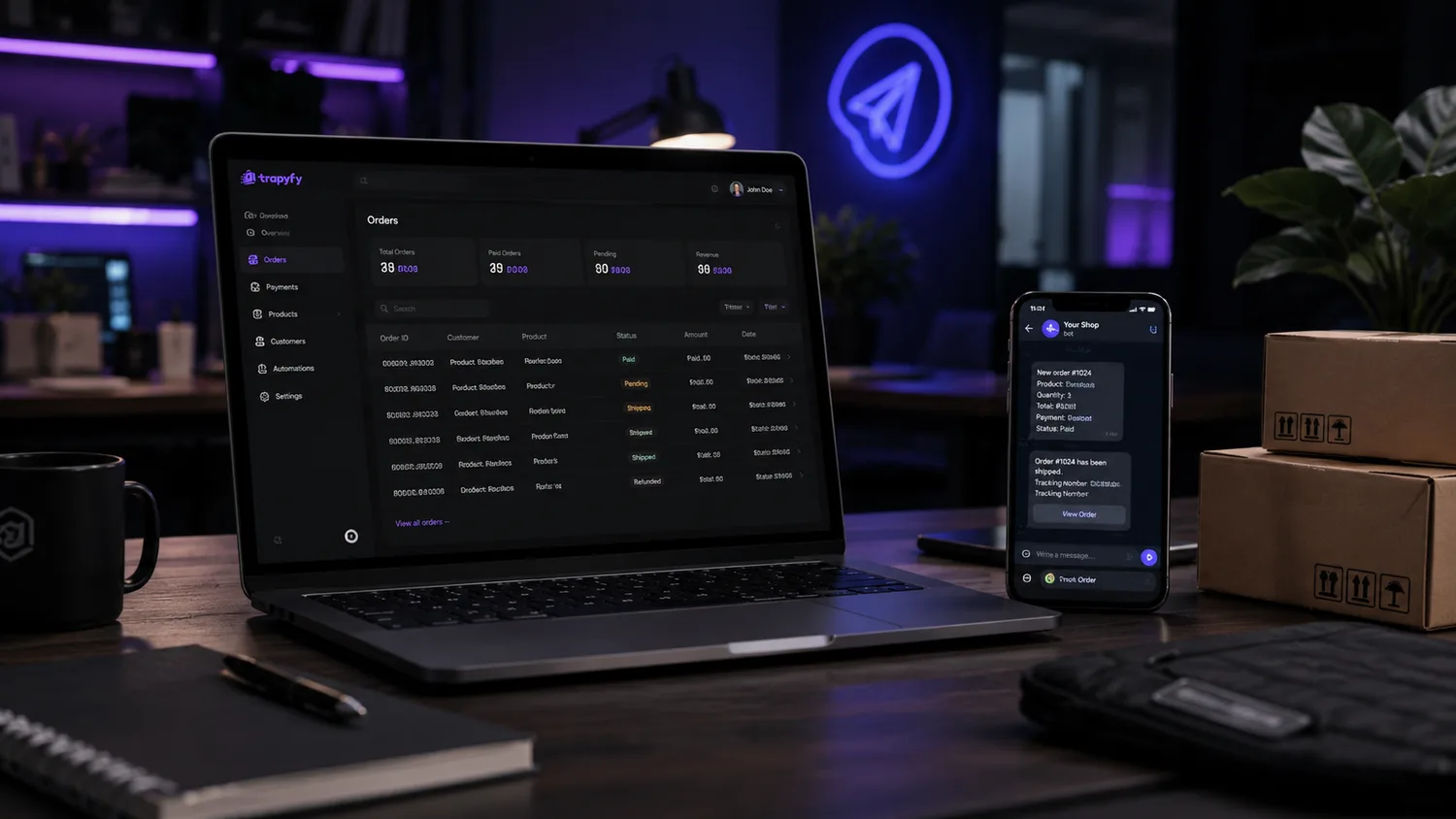
High-risk sellers do not lose deals because their product is bad. They lose them because their stack collapses the moment volume spikes. A telegram commerce platform built around automation absorbs those spikes — orders keep flowing, payments keep clearing, and operators stop firefighting one chat at a time.
Scaling on Telegram is less about adding features and more about removing manual touchpoints from every order. Below is the practical map of what to automate first, why each piece matters for regulated categories, and how to tell when your shop is genuinely ready to grow.
What is a Telegram commerce platform for high-risk sellers?
A telegram commerce platform is a bot-driven storefront layered on top of Telegram that handles the full order lifecycle inside the chat: catalog, checkout, payments, fulfillment routing, notifications, and payouts. For high-risk sellers — peptides, supplements, vape, adult, CBD, nutraceuticals — it replaces fragile DM-and-spreadsheet workflows with a single automated rail.
The difference between a bot script and a real platform shows up under pressure. A script answers messages. A platform reconciles inventory, retries failed crypto payments, splits orders across warehouses, and gives your team one system of record instead of several. If you are mapping the workflow from first click to dispatched parcel, the article Inside the Telegram Sales Flow for Restricted Products walks the full path.
Why automation matters before you scale
High-risk operators usually hit the same wall twice: first at around 30 orders per day, then again at 200. The first wall is human bandwidth — one operator copy-pasting addresses into a courier panel. The second wall is reconciliation — payments, refunds, inventory and payouts stop matching. Automation fixes both, but only if it is in place before the wave arrives.
Manual workflows are also the single biggest source of compliance risk. Hand-typed product descriptions, ad-hoc refunds, and DM-only payment links are exactly what payment processors flag. A platform that logs every step turns “trust us” into auditable history.
What to automate first
You do not need to automate everything on day one. You need to automate the four blocks that compound the most when volume rises: storefront, payments, inventory, and support. Skip any of them and growth gets expensive fast.

1. Bot storefront and catalog
The storefront is the first thing buyers see, so it is the first thing to take out of your hands. Categories, product variants, stock states and pricing should all live in the bot — not in a pinned message. A guided bot storefront creation flow gets a working shop live in minutes and removes the temptation to “just patch it manually” every time SKUs change.
2. Payments and crypto fallback
Card processing for restricted categories is unreliable by default. The fix is not a better processor — it is a router that tries cards first, falls back to crypto, and confirms once the on-chain transaction settles. The deeper trade-offs are covered in Telegram Payments for High-Risk Products, including how to keep checkout in the chat without leaking buyers to external pages.
3. Inventory across warehouses and dropshippers
Multi-warehouse routing is non-negotiable once you outgrow a single fulfillment partner. The platform should subtract stock the moment the bot confirms payment, decide which warehouse ships, and surface a low-stock alert before a SKU goes negative. Without this, you sell what you do not have — and refunds for regulated products attract scrutiny no operator wants.
4. Customer support and order routing
Most “support” messages are status updates. Tracking, ETA, refund window, restock date. Those should be answered by the bot using live order data — not by a human pasting a courier link. Reserve the human queue for genuine escalations, and route them to the right operator automatically based on SKU, country, or order value.
How to know you are ready to scale
Ready does not mean “we have a Telegram channel and we are getting messages”. Ready means your operation can absorb a 5x spike without breaking. A quick honesty check before pouring more traffic on the funnel:
- Order-to-dispatch is under 24 hours for 90% of orders without manual intervention.
- Payment retry rate is below 8% after the crypto fallback layer is live.
- Inventory drift between platform and warehouse is reconciled daily, not weekly.
- Operator headcount is flat for the last 60 days while order volume climbed.
- Support response under 5 minutes for tracking and status questions, fully automated.
If any of those is off, scaling spend on acquisition just buys you a worse problem. Fix the rail first.
When to extend with an API
The platform should cover 90% of what a high-risk shop needs out of the box. The remaining 10% — custom analytics, in-house CRM, niche fulfillment integrations — is where a Telegram Store API earns its keep. Trapyfy does not offer external API access today and a developer API is planned for a future release, so plan that last 10% around the platform for now and revisit it once the API is published.
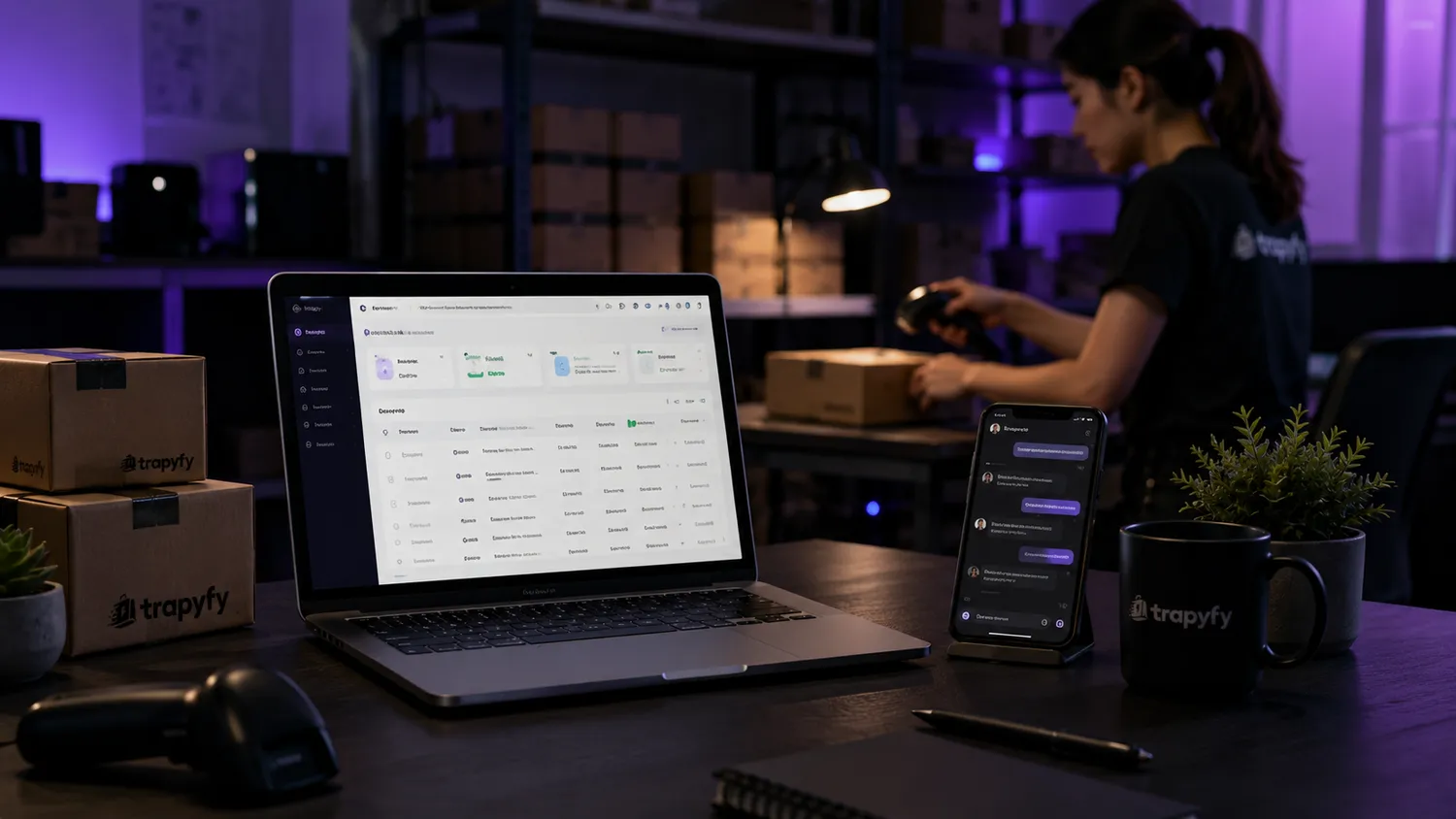
Common automation mistakes high-risk sellers make
The mistakes are predictable because the pressure points are predictable. Avoid the four below and the rest of growth is a question of demand, not infrastructure.
- Automating support before payments. Faster replies on a checkout that fails is just faster disappointment.
- Treating crypto as a backup, not a parallel rail. For restricted categories crypto is often the primary path — design accordingly.
- Hand-curating the catalog. If a human types each SKU into the bot, the bot is not the source of truth.
- Skipping the audit log. Every refund, override, and payout needs a record. Processors ask. Regulators ask.
The next move belongs to operators, not platforms
Automation is not a feature list — it is a posture. Sellers who automate before they scale spend their attention on margin, sourcing, and retention. Sellers who scale first spend it on incident reports. The choice is which problem you want at 500 orders a day.
If your roadmap for the next 90 days is “more orders”, the rail underneath them is the only thing that decides whether those orders turn into revenue or refunds. Build the rail in Trapyfy, then pour traffic on top — not the other way around.
Frequently asked questions
What does a telegram commerce platform actually replace?
It replaces the bundle most high-risk sellers run today: a Telegram channel for catalog, DMs for orders, a spreadsheet for inventory, a separate page for payment, and a chat thread for support. One bot front-end, one backend, one audit trail.
Do I need to be technical to launch one?
No. Storefront creation, payment routing, and inventory sync are configured through guided flows. External API access is not available today, so there is no development stage to plan for yet.
How fast can a high-risk shop go live?
A focused catalog under 100 SKUs with crypto payments enabled typically launches the same day. Multi-warehouse and dropshipping routing add a few hours of setup.
Is Telegram safe for regulated products?
The channel itself is neutral. Safety comes from the platform on top: KYC where required, payment routing that respects card-network rules, region locking, and full audit logs. Without those, no channel is safe.
What about chargebacks?
Crypto-first checkout removes most of them by design. For card payments, the platform should attach order metadata, delivery proof, and a complete event log so disputes can be defended with evidence rather than screenshots.