

High-risk sellers on Telegram are not following a passing trend. They are responding to a sales environment that often feels more practical, more direct, and better suited to the way their customers actually buy.
For many businesses, traditional ecommerce still works well. But for sellers in more sensitive or restriction-heavy categories, the standard online store model can create friction at almost every stage of the journey. The issue is rarely just traffic. More often, it is the gap between buyer intent and the systems meant to convert it.
A customer may be interested, ready to ask questions, and close to purchasing, yet still disappear because the path feels too fragmented. Product discovery happens in one place. Support happens somewhere else. Payment adds another layer. Follow-up is often disconnected again. By the time the order should feel simple, the process already feels heavier than it needs to be.
That is one reason more high-risk sellers on Telegram are changing the way they sell. Telegram gives them a space where communication, order flow, and customer follow-up can happen much closer together.
Why traditional ecommerce does not always fit high-risk selling
Traditional ecommerce is built around structure, consistency, and standardisation. For many businesses, that is an advantage. The customer lands on a product page, adds items to a cart, checks out, and receives confirmation. The path is familiar and widely understood.
High-risk categories do not always follow that pattern so easily.
These products often generate more questions before purchase. Buyers may want to confirm details, ask about availability, understand the process, or simply feel more confidence before paying. In those cases, the distance between interest and transaction matters more. Every extra step can weaken the sale.
For some sellers, the problem is not that ecommerce platforms are unusable. It is that they often feel too rigid for products and customer journeys that require a more guided approach.
This is where more high-risk sellers on Telegram are finding a better fit. Instead of trying to force a more complex sales process into a rigid storefront model, they are moving toward a setup that feels closer to real buyer behaviour.
Telegram is becoming part of the sales infrastructure
Telegram is no longer just a messaging channel for many online businesses. It has become a practical environment for selling, especially where speed, trust, and continuity matter.
That shift is especially visible among high-risk sellers on Telegram who want more control over how customers move from first contact to completed order.
Within Telegram, the journey can feel more immediate. A buyer can discover products, ask a question, receive a response, continue to the next step, and stay inside the same environment throughout the process. That continuity changes the experience for both sides. Customers face less friction, and sellers have fewer broken handoffs between communication and conversion.
The appeal is not simply that Telegram feels informal. It is that the platform can support a more connected and responsive way of selling.
Why high risk sellers on Telegram feel less friction
One of the clearest advantages of Telegram is that it reduces the distance between intent and action.
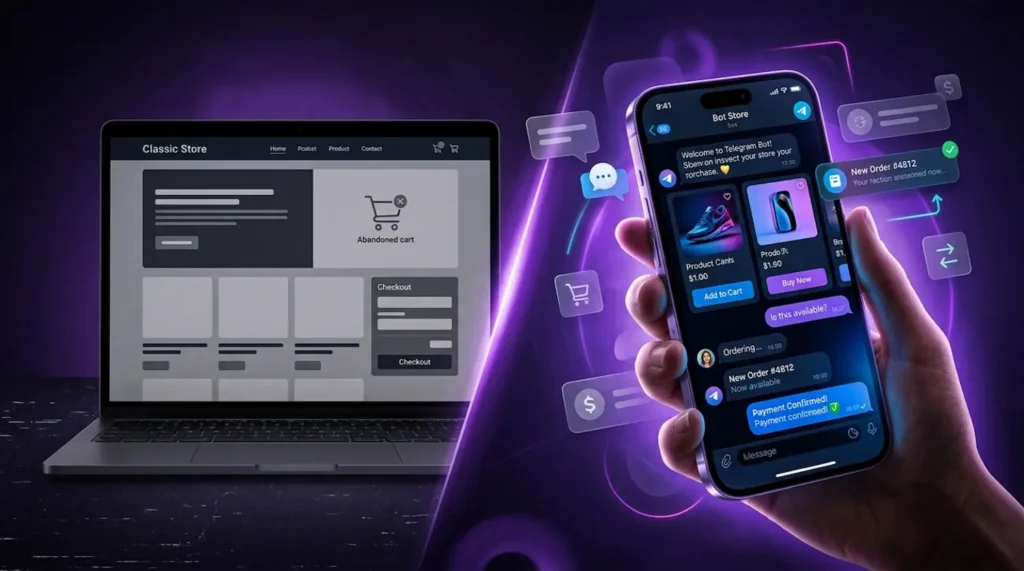
In many traditional ecommerce journeys, the customer moves across several disconnected stages. They browse the site, leave to ask a question, return later, attempt checkout, wait for confirmation, and then depend on follow-up through yet another channel. Each step creates another chance for uncertainty or drop-off.
That is exactly why more high-risk sellers on Telegram are rethinking how the journey should work. Telegram keeps the interaction closer to the point of decision.
For categories where the customer often needs reassurance before ordering, that can make a significant difference.
A more direct path from conversation to order
For high-risk products, the conversation around the sale often matters as much as the product itself. Buyers may need answers before committing. They may want quick confirmation on what happens next. They may feel more comfortable purchasing when the process feels guided rather than distant.
Telegram supports that kind of exchange naturally.
Instead of treating communication as something separate from the store, it allows the conversation to remain part of the buying journey. This is one of the main reasons high-risk sellers on Telegram increasingly see Telegram as more than a support channel. It becomes part of how the sale is actually made.
A sales journey that feels more connected
When the customer journey is fragmented, even motivated buyers can lose momentum. A standard ecommerce flow may look structured on paper, but in practice, it often breaks into pieces: product browsing, separate messaging, external payment steps, and disconnected updates.
Telegram offers a more unified experience.
When the buyer can discover products, ask questions, place an order, and receive follow-up within the same environment, the process feels more stable. For sellers working in high-risk categories, that stability can be more valuable than an elaborate storefront that creates too many weak points between interest and action.
This is another reason why high risk sellers on Telegram are paying more attention to Telegram-based selling models.
More control over the operational side of selling
Selling is not only about getting the order. It is also about managing what happens around it.
Many high-risk businesses need flexibility in how they handle customer communication, product clarification, stock questions, updates, and follow-up. Traditional e-commerce systems often divide those tasks across too many tools, which makes the operation harder to manage as soon as volume starts to grow.
Telegram can bring those moving parts closer together.
For high-risk sellers on Telegram, that often means better visibility over the customer journey and a smoother internal workflow. The result is not just a better-looking process. It is a more workable one.
Why this shift is especially relevant in high-risk categories
Some product categories need a selling environment that can handle more nuance.
Businesses in areas such as cannabis-related commerce, peptides, CBD, supplements, and other restriction-sensitive segments often deal with more hesitation, more questions, and more pressure around how the buying process is handled. Their customers may not move through a simple browse-cart-checkout flow in a predictable way.
They often need a model that supports communication without slowing the sale down.
That is why more high risk sellers on Telegram are treating Telegram as a serious part of their commercial setup. It gives them a way to keep the journey more direct while still maintaining the communication their customers expect.
Telegram is not replacing strategy. It is supporting execution.
Telegram does not fix weak operations or unclear positioning. Sellers still need a clear structure, a reliable order process, and a consistent way to manage the customer journey.
What it does offer is a more flexible environment where those elements can actually work together.
For many high-risk sellers on Telegram, that is the real advantage. The platform supports a sales flow that feels closer to how their business already operates, rather than forcing everything into a rigid system that creates unnecessary friction.
Where Telegram stores make the difference
Selling through Telegram becomes far more effective when the process is structured.
A busy chat alone is not a store. Sellers still need a way to organise products, manage customer flow, track orders, and keep the buying experience consistent. Without that structure, growth creates confusion instead of efficiency.
This is where Telegram store solutions become essential.
They allow sellers to keep the speed and directness of Telegram while introducing the kind of operational control that a growing business needs. For high-risk sellers on Telegram, that balance is what turns Telegram from a simple communication tool into a scalable sales environment.
Why more sellers are making the move
The shift toward Telegram is not about novelty. It is about fit.
When a business depends on closer communication, faster follow-up, and a more responsive path to purchase, traditional ecommerce can start to feel unnecessarily heavy. Sellers begin to look for a system that reflects how their customers already behave rather than forcing them through a process that loses momentum too easily.
That is why more high-risk sellers on Telegram are moving in this direction.
Not because Telegram is an alternative for the sake of being different, but because it offers a sales environment that can feel more natural, more direct, and more resilient for the kinds of products they sell.
And once product discovery, communication, order flow, and follow-up start working together instead of against each other, the difference becomes clear.
If your business needs a more direct and manageable way to sell, Telegram is not just an alternative — it is a different way to structure the entire sales flow. Trapyfy helps you turn that into a working Telegram store, built around real customer interaction and smoother order handling, so if you are ready to move in that direction, you can create your bot store and start building a setup that fits the way your customers actually buy.