
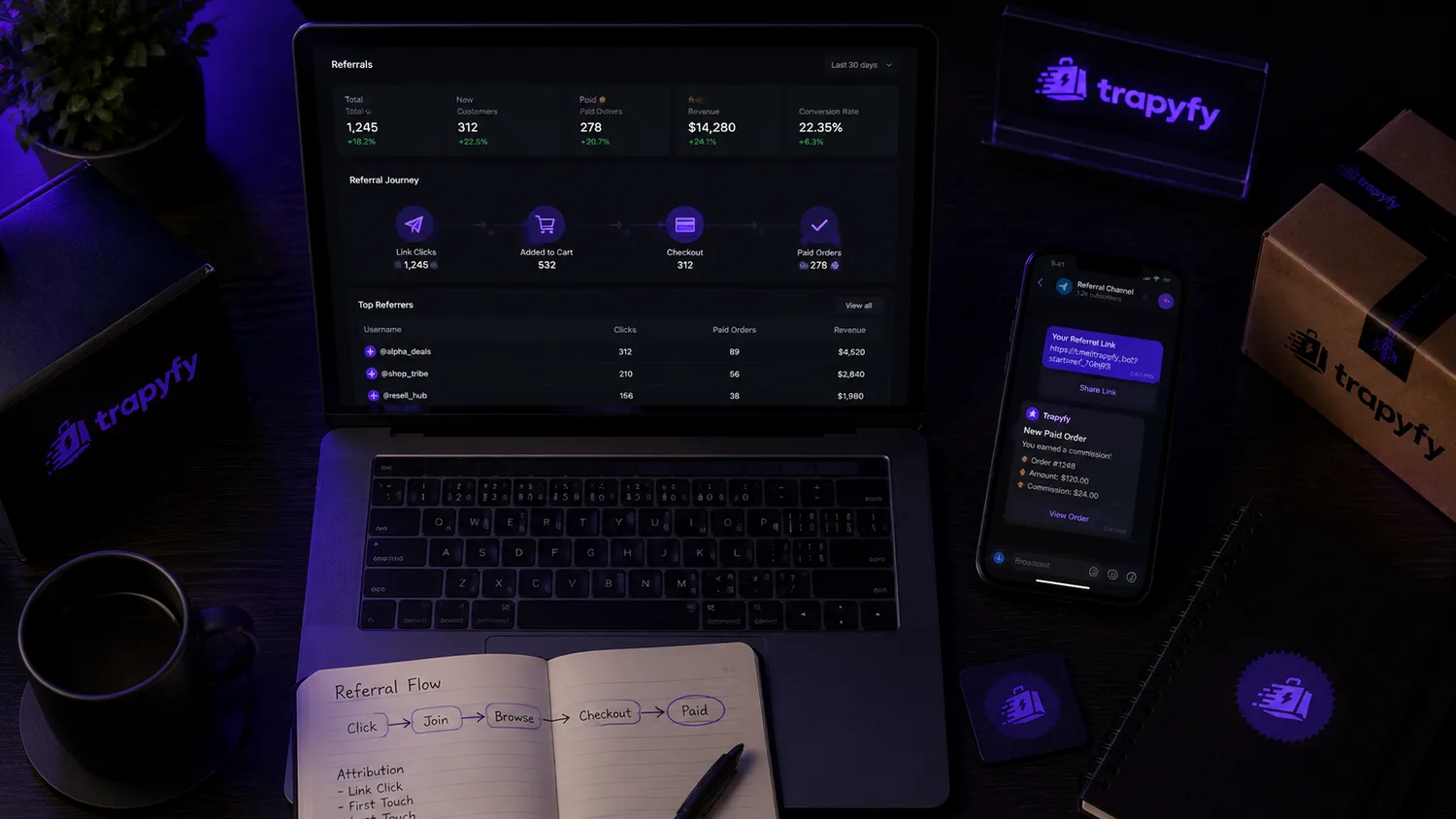
Most sellers running a Telegram shop have at least one referral link floating around — shared in a group, pinned in a channel, sent in a DM. The clicks roll in, a few new chats start, but when the month ends nobody can say which link actually produced a paid order. Telegram referral tracking is the layer that closes that gap, and for an ecommerce store it is the difference between a vanity metric and a growth channel.
A referral link only matters when a seller can connect it to a paid order, a real customer profile and a repeat purchase opportunity. Anything short of that is guesswork dressed up as marketing. For Telegram stores in particular — where checkout, messaging and customer support all live inside the same chat — referral tracking has to follow the buyer from the first click through to the second and third order, not stop at the bot welcome screen.
This guide walks through what proper Telegram referral tracking looks like, where basic referral bots fall short, and how a Telegram commerce platform can wire referrals into orders, customer data and retention so sellers stop paying out rewards on traffic that never converts.
What Telegram referral tracking actually means for ecommerce sellers
For most casual Telegram users, a “referral” is a link that adds ?start=ref_username to a bot URL and counts a click. For an ecommerce seller, that definition is too thin to be useful. Telegram referral tracking for a store has to record four things at minimum: the source of the link, the user it landed on, the order that user eventually paid for, and whether that user came back. Without all four, the seller is rewarding clicks instead of revenue.
The practical version looks like this: a referrer shares a personalised link, a new user opens the bot store, picks products, checks out and pays. The platform attributes the paid order back to the referrer, credits the reward only after payment clears, and keeps the buyer’s profile linked to the referral source for future orders. That linkage is what turns a referral programme from a giveaway into a measurable acquisition channel.
Why basic referral bots are not enough for growing stores
A standalone referral bot is fine for counting how many people typed /start after clicking a link. It stops being useful the moment a seller needs to answer questions like: which referrer drove the highest average order value, who has invited buyers that came back twice, or which channel sent traffic that never paid. Those answers live in the order table, not in the referral counter, and most off-the-shelf referral bots never touch the order table.
The other limit is reward fulfilment. A simple bot can promise a discount code or a balance top-up, but it cannot verify the underlying purchase, deduct refunds, or pause payouts when a referrer is suspected of self-referring. Once the store grows past a handful of orders a week, the manual work behind a basic Telegram referral program becomes the bottleneck, not the marketing.
The difference between clicks, leads and paid orders
Three numbers get confused in almost every referral conversation. Clicks are link opens — the cheapest, noisiest signal, and the one most basic referral bots stop at. Leads are users who started the bot and identified themselves, usually by sharing a phone number or completing a profile. Paid orders are buyers who completed checkout with money that actually settled.
Sellers who pay rewards on clicks burn budget on bots, scrapers and curious passers-by. Sellers who pay on leads burn it on tyre-kickers. The only sustainable referral economics tie the payout to the third number — and that requires the referral system and the order system to share the same database.
What customer data should be connected to each referral
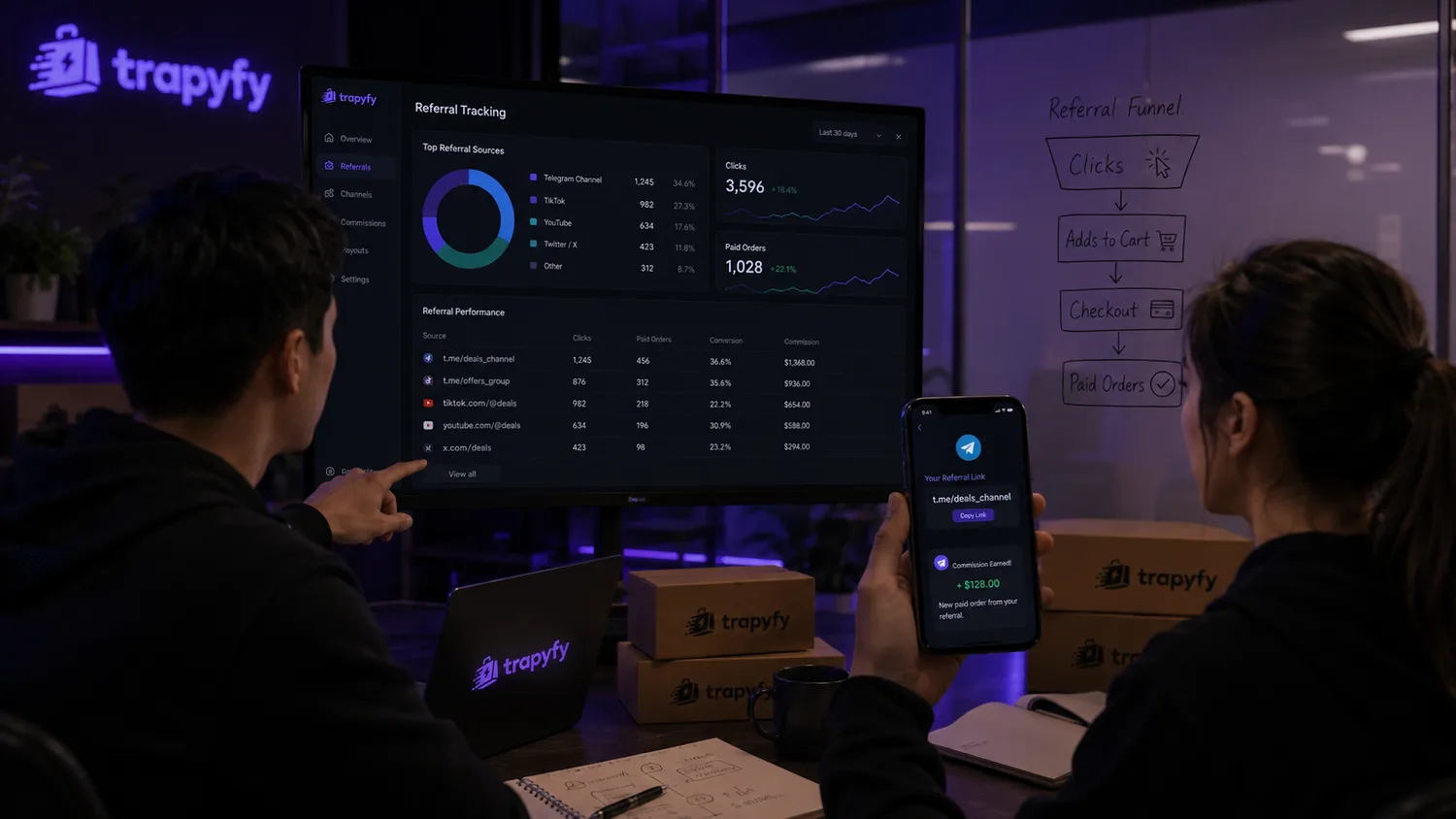
Once a referral leads to a paid order, the buyer profile should carry the source forward. At a minimum, the store needs the Telegram user ID, the phone number used at checkout, the referrer ID, the timestamp of the first click, the first order ID and the running lifetime value. With that bundle, the seller can answer the questions that actually drive decisions: which referrers bring repeat buyers, which products convert best from referral traffic, and which segments deserve a different reward tier.
This is where a proper Telegram CRM for sellers matters more than another standalone tool. The referral source is a customer attribute, not a marketing metric, and treating it that way unlocks segmentation that a referral-only bot cannot offer.
How referral tracking helps increase repeat buyers
Referral tracking is usually pitched as an acquisition tool, but its real upside is retention. A buyer who arrived through a friend’s link has a warmer entry point than a cold ad click, and they convert again at higher rates when the post-purchase flow remembers how they got there. The store can send a different thank-you message, drop them into a different loyalty tier, or trigger a second-order discount that the original referrer also benefits from.
None of that works without persistent attribution. The moment the referral source drops off the buyer profile after order one, the retention story collapses back into generic broadcast messaging. Pairing referral tracking with Telegram shop loyalty tactics — tiered rewards, repeat-buyer perks, win-back offers — is what turns a single attributed order into three or four.
Common referral tracking problems inside Telegram
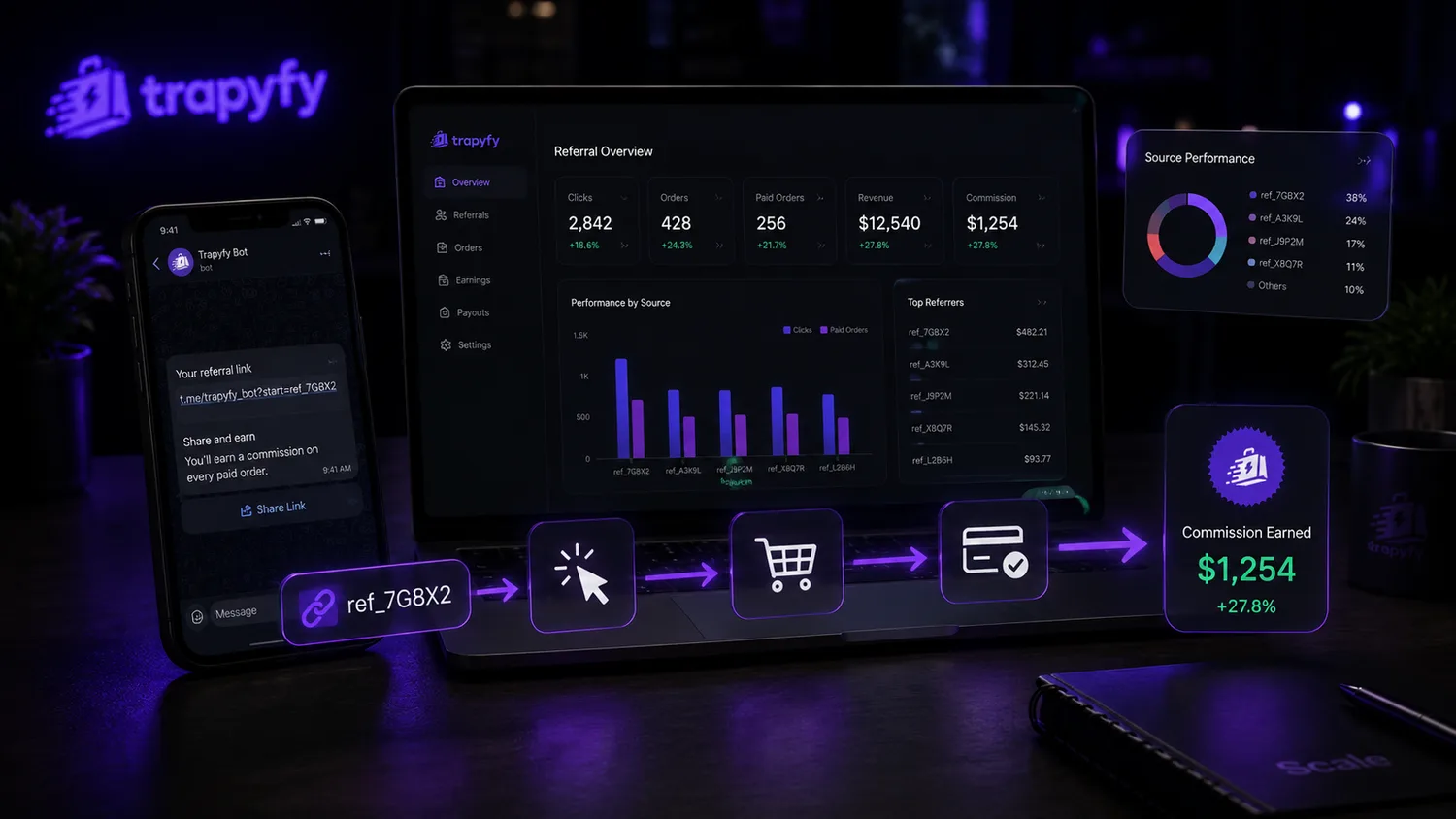
Several issues recur across stores that try to bolt referrals onto a Telegram setup without a connected backend:
- Clicks without sales. Referrers share aggressively in low-quality groups, traffic spikes, conversion stays flat.
- Manual reward fulfilment. Sellers reconcile referrer balances by hand at the end of each week, which scales poorly and invites errors.
- Fake referrals and duplicate users. The same person opens the bot from a second account to claim their own reward.
- Referral abuse. Coordinated groups farm sign-ups that never check out, then cash in rewards on discounted first orders.
- Lost attribution. The referral source vanishes after the first session because it was never stored on the buyer profile.
- No customer data. Sellers know a referrer exists but cannot see the buyer’s phone, order history or lifetime value, so segmentation is impossible.
Each of these is a symptom of the same root cause: the referral layer is not connected to the order layer or the customer record. Fix that, and most of the problems either disappear or become enforceable through rules instead of policing.
How Trapyfy helps sellers connect referrals, orders and customer data
Trapyfy treats referrals as part of the store, not a side tool. Every storefront comes with referral link generation tied to the seller’s user table, attribution that survives across sessions, and reward rules that only fire after a paid order clears. The same dashboard that shows orders shows which referrer delivered each one, which buyers came back, and which links are quietly driving most of the lifetime value.
Because the platform also handles storefront, payments, inventory, post-purchase messaging and loyalty, sellers do not have to glue a referral bot to a separate analytics tool to a separate CRM. The Telegram commerce platform for sellers sits underneath all of it, which is why referral abuse rules, duplicate-account checks and reward caps can be enforced at the order level rather than patched on top after the fact.
From referral clicks to repeat customers
Sharing links is the easy part of any referral programme. The hard part is making each click accountable — to a buyer, to an order, to a reward that the store can afford to pay because the underlying order actually settled. That is the test every referral setup should be measured against, and it is the test most basic Telegram referral bots fail by design.
A referral programme worth running inside Telegram has to behave like the rest of the store: orders attributed, customers remembered, rewards earned on paid revenue, and repeat purchases nudged through automation rather than chased manually. Get that loop running cleanly and the referral channel stops being a leaky bucket and starts compounding.
FAQs
What is Telegram referral tracking?
It is the practice of linking each Telegram referral click to a specific buyer, paid order and customer profile, so sellers can attribute revenue and pay rewards on actual sales rather than raw traffic.
How is referral tracking different from a referral bot?
A referral bot usually counts clicks and sign-ups. Referral tracking inside an ecommerce store also connects those clicks to checkout data, payment status, customer records and repeat purchases, which is what reward rules and reporting actually need.
How can sellers prevent Telegram referral abuse?
By holding rewards until the referred order is paid and refund-free, checking for duplicate accounts at checkout, capping rewards per referrer per period, and excluding self-referrals at the data layer instead of trying to catch them after payout.
Can referral tracking help increase repeat buyers?
Yes, when the referral source stays attached to the buyer profile after the first order. The store can then trigger second-order offers, loyalty upgrades and referrer bonuses on repeat purchases instead of treating every order as a new acquisition.
Do I need a separate tool for Telegram affiliate tracking?
Not if the storefront already handles it. A platform that combines store, payments, customer data and referral attribution avoids the data gaps that bolt-on tools introduce, and lets sellers manage affiliates, payouts and reporting from a single dashboard.